
Wishing For a Rock to Change
If only this were easier. The thought floated through my mind as I clung to the rock 150 feet in the air. My fingers pulled at the crack on my right while I pasted my feet tenuously on the gray granite in front of me. I strained, sweating, trying to brute-force my way up, but I was stuck. I’m not going to make it.
Skywalker Traverse is a 400-foot, 5-pitch climb in Squamish, B.C. It was a perfect summer day: blue skies, shady crags, and the smell of pine needles in the cool air. But I couldn’t figure out the sequence. Eventually, my stamina gave out and I fell, dangling from the last piece of gear I had placed. I hit the wall in frustration.
If only the footholds were better. If only it were a little less vertical. If only I were stronger. The climb was a moderate 5.8, well within my ability. But still, there I hung, wishing—wishing for things to be different, less hard, simpler.
It was a waste of energy. I realized the rock wasn’t going to change. If I was going to make it to the top, I had to change. To think differently. What if I place my hands here, put my feet there and there, then move?
It worked. I stopped wishing and put my energy into what I could actually control. I finished that section, tired but elated, and brought up my partner so we could move on to the money pitch: the titular traverse. It’s an easy traverse right, but it slopes down over an exposed face, leaving you feeling like you’re walking across the sky—like a Jedi.
But you don’t get to be a Jedi unless you earn it. Put in the work. Be strategic. Flow around the problem instead of grunting through it.
When a situation isn’t going to change, wishing is a trap—an energy sink and a waste of time. Often, it’s you who needs to make the change.
So where are you wasting energy wishing? And what can you do instead?
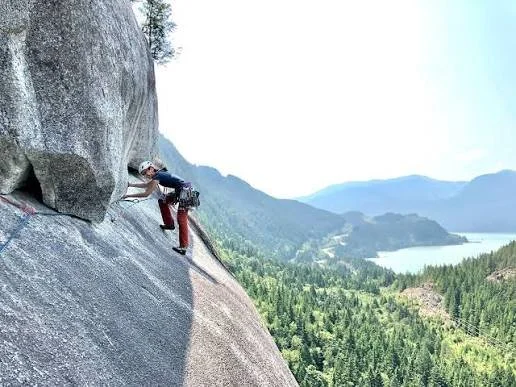
Photo courtesy of She Moves Mountains
